
Forest of Misty Vision (2015–2022)
This early series marks the origin of Kazuaki Koseki’s artistic inquiry into the boundary between nature and human intervention.
Through the ephemeral landscapes of a submerged forest, the work contemplates coexistence, transformation, and the hidden reality within natural phenomena.
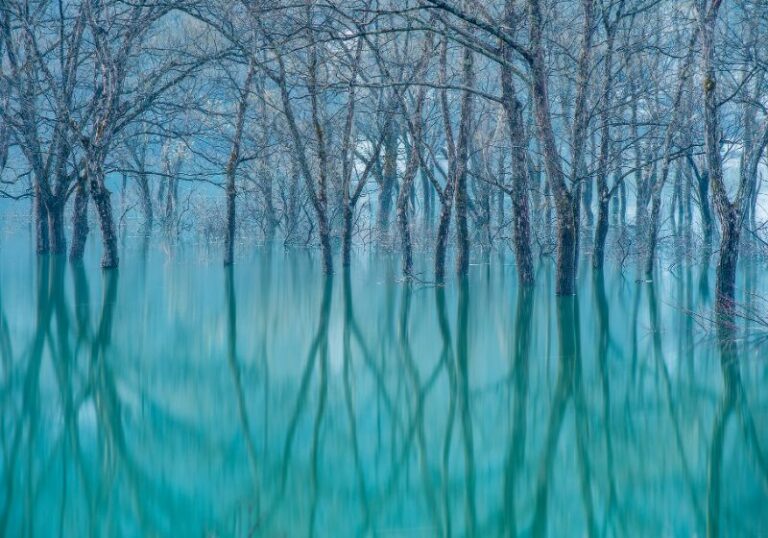
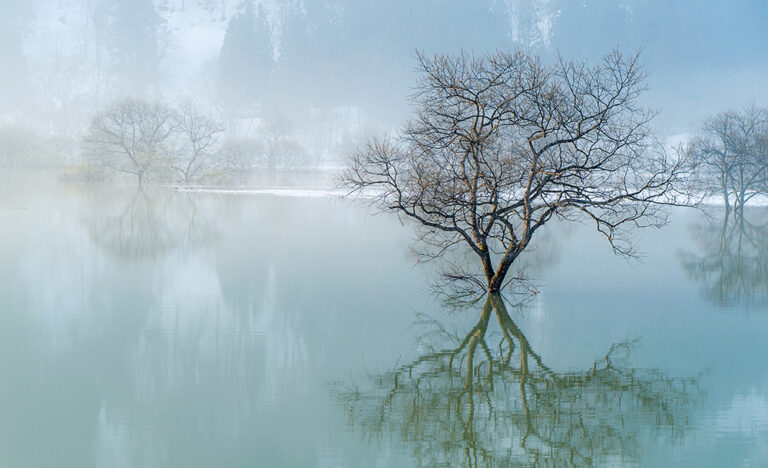
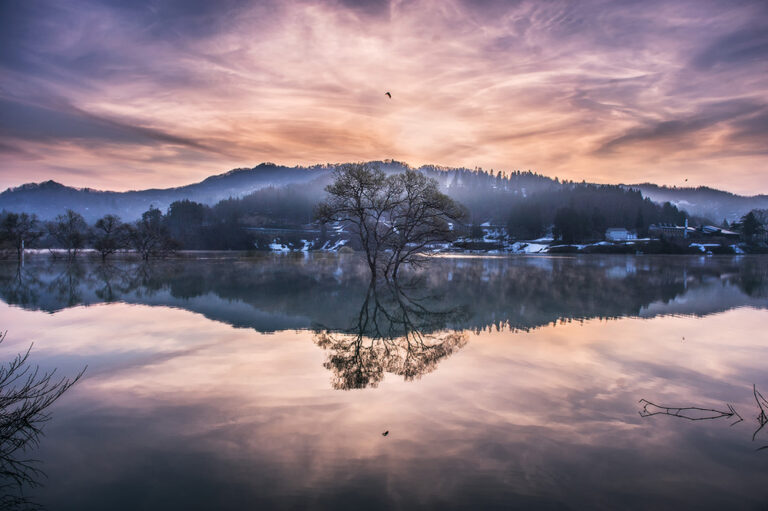
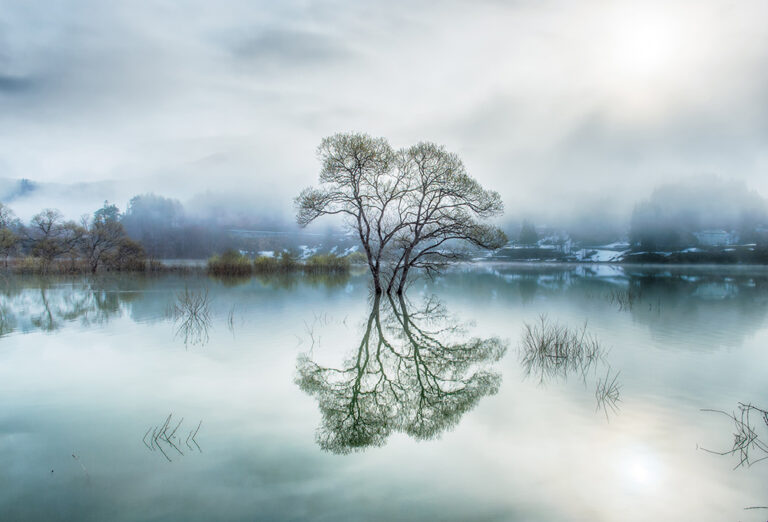
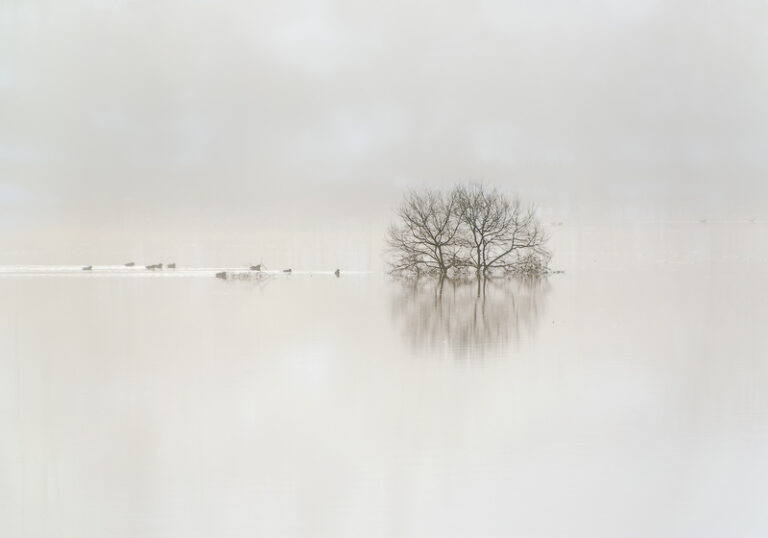
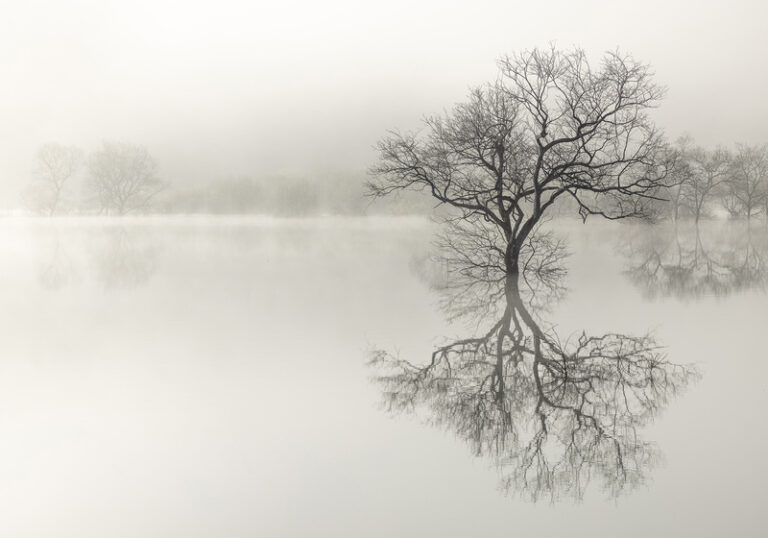
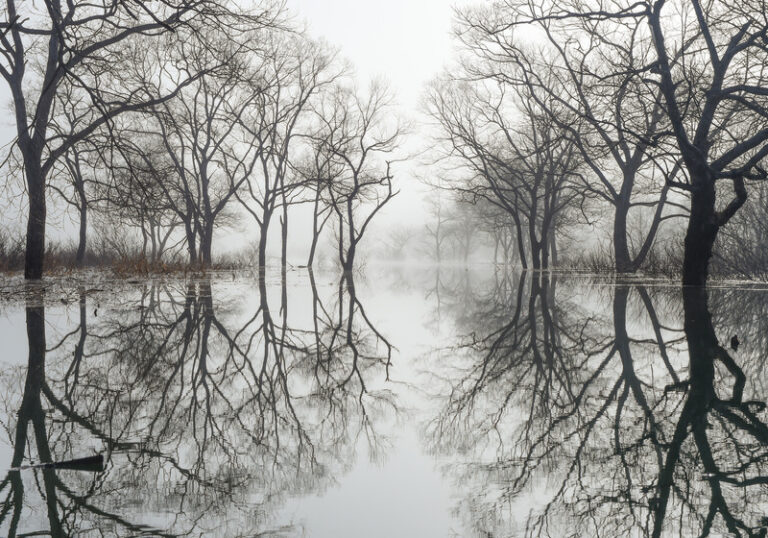
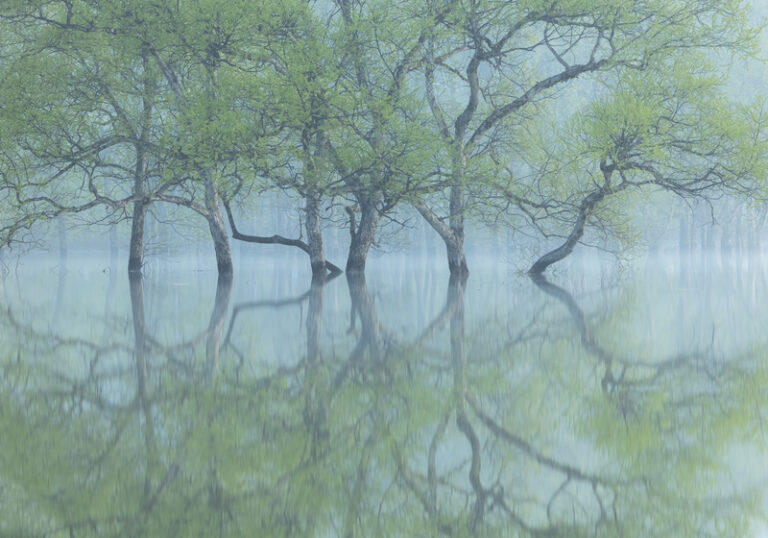
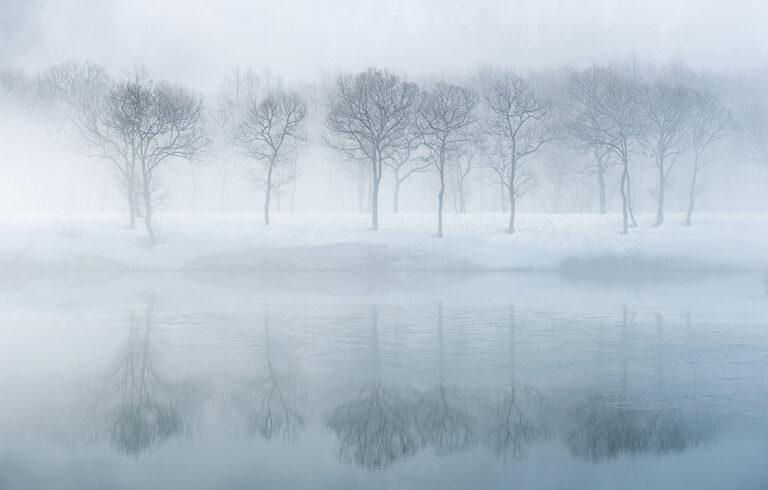
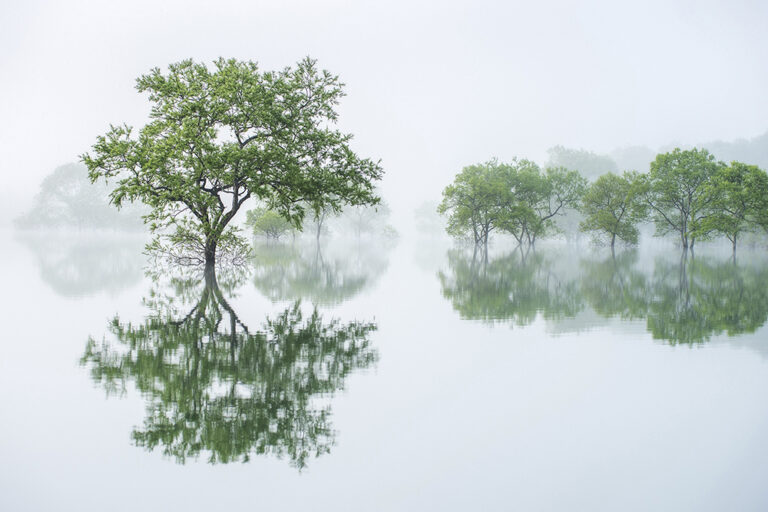
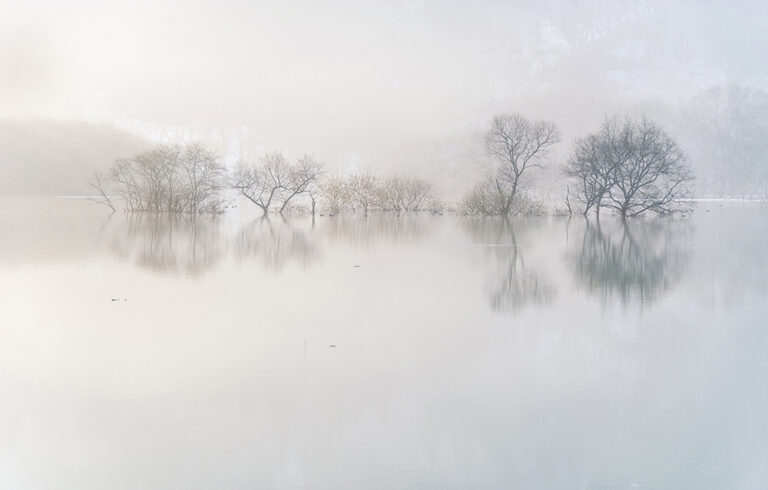
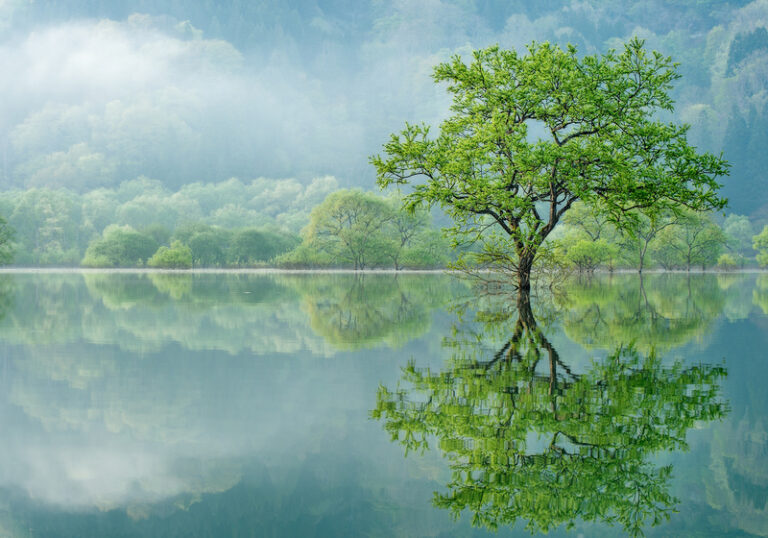
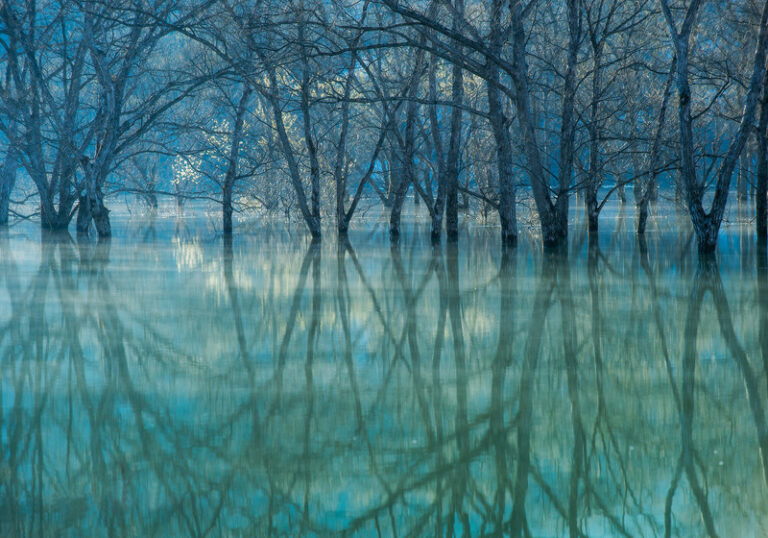
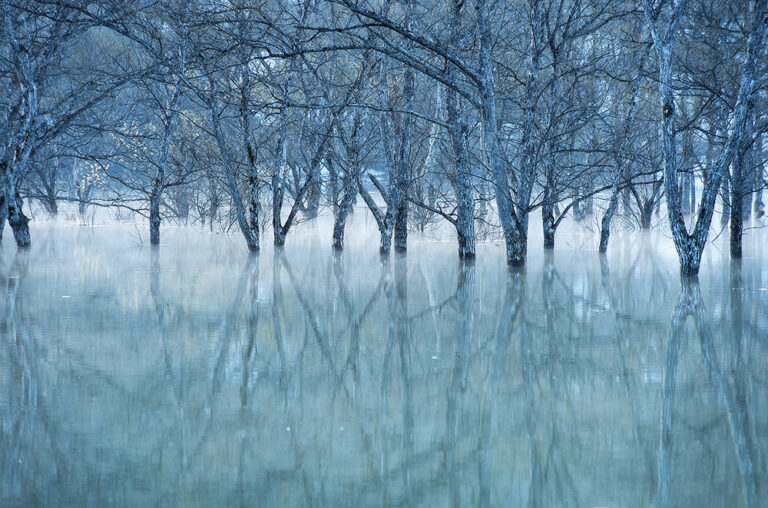
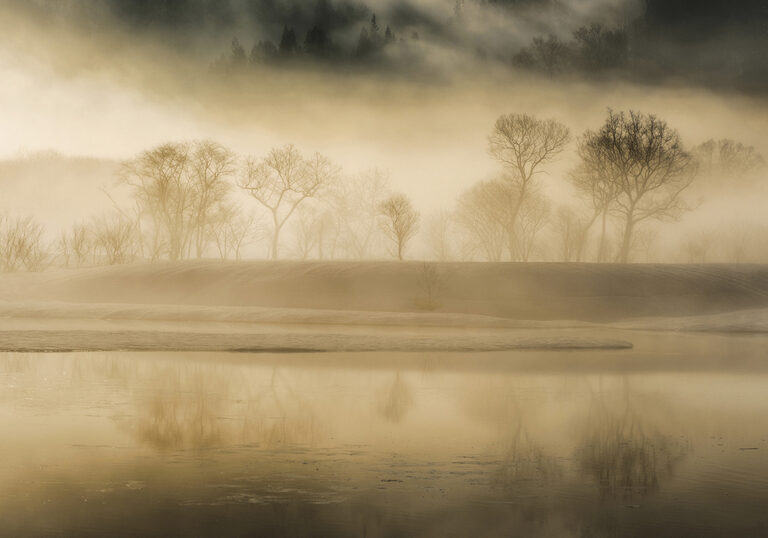
This series was photographed over seven years in the submerged forest of Lake Shirakawa,which appears for only a month each spring when the snowmelt water floods the basin.
It explores a world woven by the humidity unique to the northern valleys of Japan,a delicate ecosystem shaped by the interconnection of mountains, forests, and rivers,and the subtle boundary where reality and unreality intersect.
My first encounter with this place was on a misty spring morning.The forest, shrouded in fog and reflected upon the silent water, left me in awe.At the same time, I became aware of the dam that had transformed what was once a river,and I began to question the relationship between people and the environment.That tension — between beauty and contradiction — compelled me to return again and again.
Surrounded by the Iide mountain range, Iide Town in Yamagata Prefecture endures several meters of snow each winter.As spring arrives, the melting snow flows from the Shirakawa, Hirokawara, and Koyagawa rivers,submerging a forest of white willows at the upper reaches of Lake Shirakawa.
At dawn, dense fog rises, and the surface of the water shifts in color from light blue to emerald green depending on the angle of light.It is a landscape saturated with humidity — fleeting, alive, and dreamlike.
This ephemeral scene of the flooded forest was created by human intervention.Lake Shirakawa lies at the head of the Shirakawa Dam,a reservoir built for flood control and agricultural use.While the dam provides safety and sustains human life,it also disrupts ecosystems, alters the river’s flow,and traps sediment that once nourished the downstream. Our pursuit of what is “right” for human survival inevitably creates another reality — one that reshapes nature itself.
And yet, in front of this landscape, a quiet sense of beauty transcends human intention.In the mirrored reflections of mist and trees,the natural and the artificial, the real and the unreal, quietly converge.Within that contradiction, I sense another layer of reality — a space where contemporary views of nature and human existence can be reexamined.
As spring fades, the snowmelt flows into the rice fields,and the forest slowly returns to itself.
Like a vision dissolving into the mist, it vanishes —yet within that transience lies the truth of a world where nature and human presence coexist in delicate balance.